
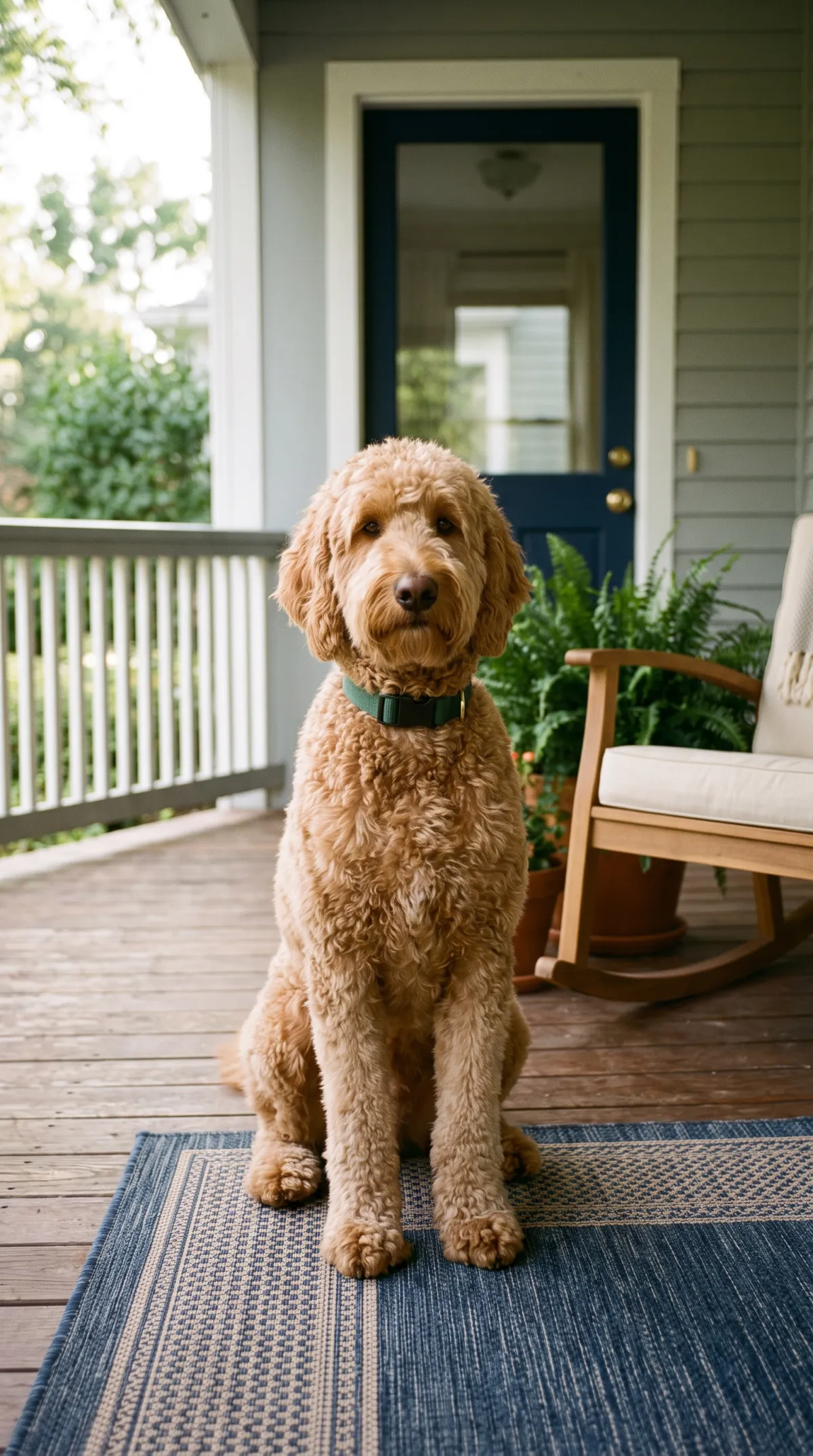
How to Teach Your Dog to Greet Visitors Without Rushing the Door
For a lot of dogs, a knock at the door or a ringing doorbell is the single most exciting event in the entire day. The result is a dog that barrels toward the door, jumps on whoever walks in, and becomes temporarily impossible to redirect while everyone tries to manage the chaos.
Most owners respond to this by trying to suppress the behavior in the moment: grabbing the collar, giving a string of commands that go mostly unheeded, apologizing to guests while the dog continues doing exactly what it was doing. What’s missing isn’t better management in the moment. It’s a trained routine that tells the dog what door arrivals are supposed to look like, practiced enough times that the behavior becomes the dog’s default rather than something the owner has to enforce every time.
Why Door Greetings Are One of the Harder Behaviors to Train
The door greeting problem has a specific difficulty that makes it different from most household training challenges: the trigger, the knock or bell, produces an immediate arousal spike before any training can engage. By the time the owner is trying to give a command, the dog’s arousal level is already elevated enough that its ability to respond to familiar cues has dropped significantly.
Fun Fact: Dogs often generalize the sound of a doorbell or knock quickly and strongly because it reliably predicts something exciting, which means the arousal response can begin before the owner has even processed the sound themselves, giving the handler almost no window to redirect before the dog is already at the door and past the threshold where trained behavior works reliably.
This is why “sit” or “stay” given at the door to a dog mid-rush rarely works: the cue is being delivered above the dog’s threshold for responding, into a situation where the dog has no trained alternative behavior and maximum motivation to do what it’s been doing. The solution is building the alternative behavior first, at low arousal, before asking the dog to use it at the door with a visitor actually arriving.
Step One: Build the Alternative Behavior Away From the Door
The training starts without any visitors and without the doorbell. The goal is to teach the dog a specific location to go to when guests arrive, a mat, a bed, or a designated spot, and to hold that position while the greeting happens.
The mat or spot serves two purposes. It gives the dog a clear, concrete expectation rather than a vague “don’t do that” correction. And it physically places the dog at a distance from the door where the greeting can happen calmly rather than at the threshold where the arousal is highest.
Building this behavior follows the same progressive structure covered in our post on teaching your dog to settle in public places: start with the dog offering the behavior voluntarily near the spot, reinforce heavily, build duration, add the handler moving away, and then gradually increase distraction. The spot becomes a place the dog has a strong positive association with rather than something imposed on it.
Step Two: Add the Doorbell or Knock as the Cue
Once the dog reliably goes to its spot on a handler cue, the doorbell or knock gets introduced as the signal to go to the spot. This is classical conditioning work: play the doorbell sound, immediately cue the dog to the spot, and reward for going there and staying.
Quick Fact: The transition from cue-to-spot to sound-to-spot is the step that most owners rush, practicing it only a few times before expecting it to hold under the real pressure of an actual visitor arriving. The behavior needs to be practiced with the doorbell sound dozens of times at low arousal before it will hold reliably when the actual excitement of a visitor is added to the picture.
After many repetitions with just the sound, the dog begins moving toward the spot on the doorbell alone before any handler cue is given. That’s the association being built: doorbell means go to the spot, not doorbell means rush the door.
Step Three: Manage the Entryway During Practice
While the alternative behavior is being built, managing the physical entry point prevents the dog from rehearsing the rushing behavior during the training period. Rehearsal of an undesired behavior during training reinforces it, which is why letting the dog practice door-rushing while also doing spot training produces slower and less reliable results.
Options for managing the entryway include a leash tethered to a furniture anchor point that limits how close the dog can get to the door, a baby gate that creates a physical boundary between the dog and the door area, or simply practicing with the dog on leash so the handler can prevent the rush during the early stages of training.
Training Stage | Entryway Management | Dog’s Behavior Goal |
|---|---|---|
Foundation (spot training) | Door not involved, no visitors | Goes to spot on cue, holds |
Sound introduction | Recorded doorbell, no real visitors | Goes to spot on doorbell sound |
Managed arrivals | Leash, gate, or controlled entry | Holds spot while handler opens door |
Familiar visitors | Helper enters, rewards dog at spot | Maintains spot through greeting |
Progressive challenge | Unfamiliar visitors, group arrivals | Holds spot through varied arrivals |
Step Four: Progress From Familiar to Challenging Arrivals
The most common failure point in door greeting training is moving to real visitor scenarios before the dog has enough practice in easier versions. Familiar visitors, the neighbors the dog already knows, a family member who has worked on this before, create a lower-arousal arrival scenario that gives the dog the best chance to succeed early in the process.
The progression moves from low to high challenge in a few specific dimensions: the familiarity of the visitor, the number of visitors arriving at once, and the visitor’s behavior during the greeting. A single calm familiar visitor who ignores the dog and lets the owner complete the greeting routine before any attention is given is an easier trial than an excited relative who immediately approaches the dog with high energy.
Fast Fact: Visitors who greet the dog enthusiastically the moment they walk in, before the dog has demonstrated the greeting behavior the owner has been training, undermine the training more than almost any other single factor, which is why briefing guests on the greeting protocol before they arrive is genuinely part of the training process rather than an optional social awkwardness.
As the dog succeeds with familiar visitors, the arrivals can become progressively less predictable: delivery drivers, visitors the dog hasn’t met, multiple people arriving at once. Each successful repetition at the current level builds the reliability needed to handle the next, harder level.
What Consistency Across the Household Requires
Door greeting training breaks down faster than most household behaviors when different family members handle arrivals differently. A dog that is expected to go to its spot when one person answers the door but is allowed to rush when another does learns that the rule applies to one person rather than as a household expectation.
Every person who opens the door needs to apply the same sequence: wait for the dog to go to its spot before opening, reinforce for holding the spot during the arrival, and release the dog for a controlled greeting only after the initial arousal has dropped. This connects directly to the broader principle that household consistency is what makes training hold, which is covered in depth in why dogs need boundaries, not just commands.
Build Reliable Door Manners With Cornerstone K9
A dog that greets visitors calmly is the result of a trained routine, not a naturally polite temperament. At Cornerstone K9, our private lessons work through the specific mechanics of building household behaviors like door greetings that hold up when the real-world pressure is on.
For dogs where door rushing is part of a broader pattern of over-arousal or impulse control challenges, our behavior modification program addresses the underlying arousal and threshold issues that make these specific behaviors harder to train. Serving Raleigh, Cary, Apex, Fuquay-Varina, Garner, Sanford, Fayetteville, Southern Pines, and Aberdeen. Reach out today for a free consultation.


