
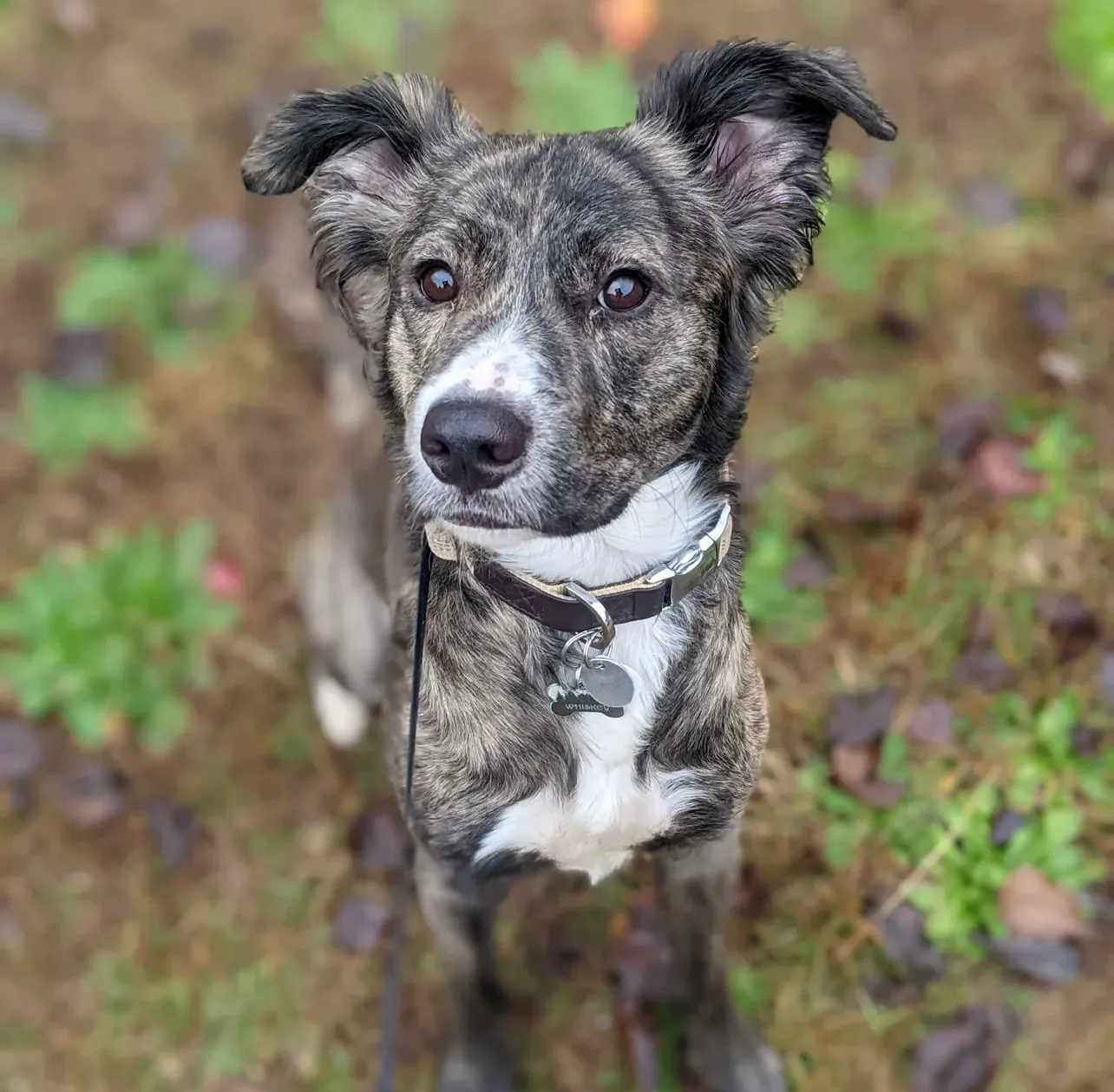
Why Dogs Become Excited When the Leash Comes Out
For most dogs, the sound of the leash coming off the hook is the best news of the day. Tails start going, paws start dancing, and many dogs jump, spin, bark, or bolt for the door before the leash is even in hand. It is easy to see this as pure happiness, and it is. But it is also a pattern the dog has learned, and when it goes unchecked it makes walks harder from the first second.
The good news is that the same learning process that built the excitement can be used to change it. This guide explains how anticipation builds, why it reinforces jumping, barking, and rushing, and how a structured pre-walk routine rewards calm behavior before the door ever opens.
Why the Leash Triggers So Much Excitement
Dogs are very good at spotting the small signals that predict something good. The jingle of the leash, the sound of your keys, putting on your shoes, or heading toward the door all come right before the walk, so each one becomes a cue that says something wonderful is about to happen. Over time the excitement starts earlier and earlier in the sequence.
Fun Fact: Many dogs become excited at signals that have nothing to do with the leash itself, like picking up shoes or grabbing a jacket, because the dog has learned that those moments reliably come before the walk.
For most dogs the walk is also the most stimulating part of the day, with new smells, new sights, and time with their person. That makes the whole sequence powerfully rewarding, and a powerful reward makes whatever behavior comes right before it stronger.
How Anticipation Reinforces Jumping, Barking, and Rushing
Here is where the pattern gets locked in. The walk follows a chain of steps: the leash is picked up, it is clipped on, the door opens, and the dog goes out. If the dog jumps and barks during the first step and the chain keeps moving forward, the dog learns that jumping and barking make the walk happen. If the dog rushes the door and the door opens anyway, rushing gets paid with the best reward available.
Handlers often add to this without realizing it. Hurrying to clip the leash on while the dog bounces, talking in an excited voice, pleading with the dog to calm down, or opening the door the moment the dog lunges are all ways the excited behavior ends up being rewarded.
Quick Fact: Skipping walks to avoid the chaos tends to make things worse. The less often a dog gets out, the more excited it becomes when it finally does, which makes the excitement and the pulling stronger.
The goal is not to remove the excitement. It is to teach the dog that calm behavior is what moves the sequence forward.
Build a Structured Pre-Walk Routine
A pre-walk routine gives the dog a clear, predictable job at each step, and it makes calm the way to earn the walk. Practice it when you are not in a rush and when the dog does not need to relieve itself right away.
Pick up the leash and wait. Hold it without moving toward the door. If the dog jumps or barks, stay still and stay quiet. Wait for the dog to settle. Tip: The pause is the exercise. Standing still while the dog works out what earns progress is what teaches the lesson.
Ask for a sit or a settle. Request a sit or send the dog to a mat. Reward calm with quiet praise, and expect it to take some patience at first. Tip: Reward the moment the dog is actually still, not the moment it starts to sit while still bouncing.
Clip the leash on only when the dog is calm. If the dog gets excited again, take the leash away and try again. Repeating this until the dog sits quietly while the leash goes on is the point of the exercise. Tip: The leash and the walk are what the dog wants, so make each of them depend on calm.
Wait at the door. With the leash on, go to the door and ask for a sit. Open the door slightly, and if the dog surges forward, calmly close it and try again. Only open it fully and go through when the dog stays put. Tip: Use a release word, such as “okay,” so the dog knows exactly when it is allowed to go.
Start the walk calmly. Step outside as a team, and begin moving only when the leash is loose. If the dog hits the end of the leash, stop and wait. Tip: Moving forward is the reward, so a tight leash should pause the walk.
This is the same approach animal welfare organizations recommend for excited dogs: the dog earns the leash, the open door, and the walk by sitting calmly, and learns that excited behavior gets no response while impulse control gets everything. A short wait at the door that includes at least a few seconds of sitting before the door opens is a basic building block for loose leash walking.
Practice the Routine Without Going for a Walk
One of the most useful tricks is to break the link between the cues and the walk. If every time the leash comes out the dog goes for a walk, the leash will always predict a walk. If it sometimes comes out and nothing happens, it loses some of its power.
Pick up the leash and put it back. Clip it on, then take it off and do something else. Walk to the door and come back. Do these small repetitions several times a day, keeping them short and boring. The more often the leash predicts nothing in particular, the less dramatic the reaction becomes.
It is also worth practicing the routine in low-pressure moments, not when you are late. Training while the dog is already worked up outside or when you are rushing out the door makes it harder for the dog to learn.
Progress Gradually
Move on only when the current step is reliable.
Stage | Goal |
|---|---|
Leash in hand | The dog stays calm while you hold it, with no jumping or barking |
Sit while clipping | The dog sits quietly while the leash is clipped on |
Door opens slightly | The dog waits without surging as the door opens |
Door opens fully | The dog waits for the release word before stepping out |
Walk begins | The dog walks with a loose leash from the first step |
If the dog slips back at any stage, return to the previous one. Dogs learn this pattern in layers, and a few good repetitions at each level are more valuable than rushing to the end.
Mistakes That Keep the Excitement Going
A few habits undo the work faster than anything else. Shouting or begging the dog to calm down adds to the noise and excitement instead of reducing it. Rushing through the routine on busy mornings teaches the dog that the rules are sometimes optional. Opening the door while the dog is jumping or lunging rewards exactly what you are trying to stop. Different family members following different rules makes the pattern much harder to change. And trying to teach loose leash skills only once the dog is already out and fired up means the dog is too stimulated to learn.
Exercise matters too. A dog that has had some play or mental work before the routine starts is usually able to settle more easily than one that has been waiting all day.
When Excitement Is More Than Excitement
Most pre-walk excitement is normal and responds well to training. If your dog’s reaction is very intense, such as frantic spinning, grabbing at the leash or your clothes, redirecting onto your hands or legs, or not being able to settle at all, it may be a sign of frustration or a more serious arousal problem. In that case it helps to work with a qualified trainer, and to check with your veterinarian if the behavior has changed suddenly.
Calm Pre-Walk Habits With Cornerstone K9
If your dog gets excited when the leash comes out, the fix is a clear routine and consistent practice, and a trainer can help you build both. At Cornerstone K9, our private lessons walk owners through pre-walk routines and leash manners step by step, and our adult board and train program builds the impulse control and structure that make walks easier for the long term. For dogs whose arousal goes beyond ordinary excitement, our behavior modification program can help.


